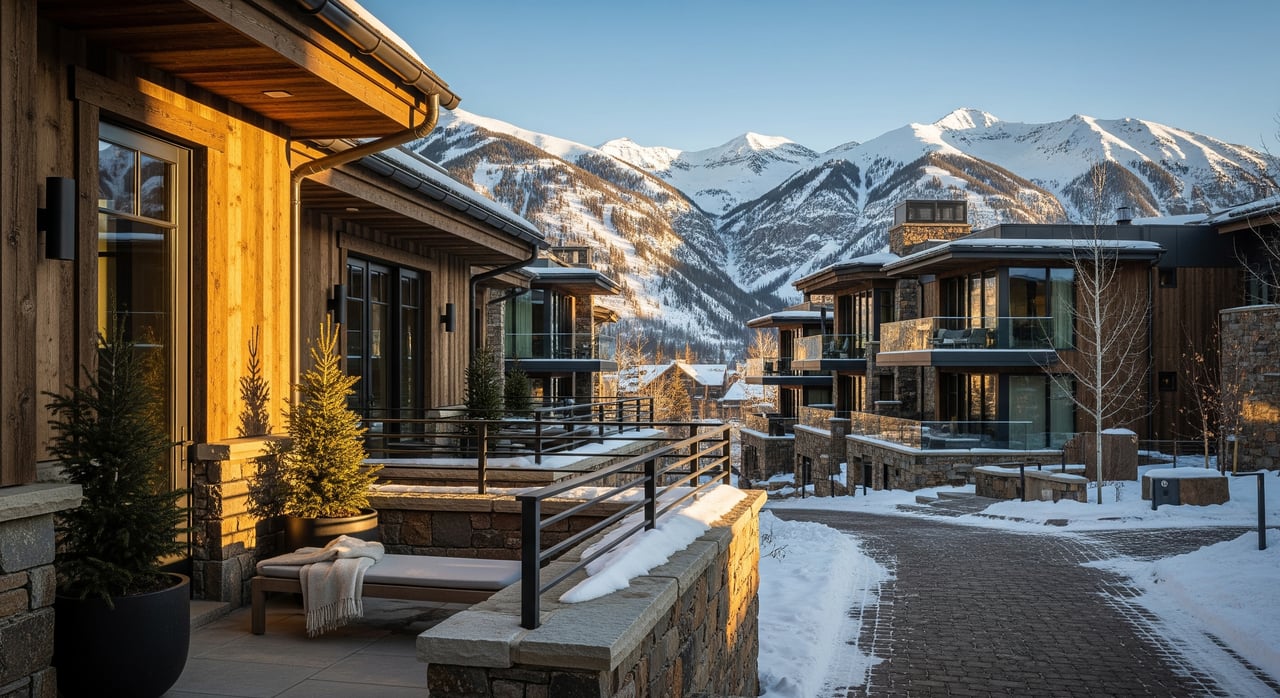
Torn between a condo and a townhome for your Telluride base? You are not alone. With world-class skiing, a year-round gondola, and a unique split between historic Telluride and on-mountain Mountain Village, the choice comes down to how you want to live and what you want to own. In this guide, you will compare ownership, HOA scope, insurance, ski access, rental use, and a step-by-step decision framework tailored to San Miguel County. Let’s dive in.
Telluride vs Mountain Village snapshot
Telluride sits in a scenic box canyon with a compact, walkable core focused on dining, arts, and historic character. Mountain Village is a planned resort community above town, closer to the primary lift bases and ski terrain.
A free, public gondola connects town and Mountain Village year-round. If you want to remain car-light, this link is a major quality-of-life advantage for reaching slopes, restaurants, and services.
Elevation and exposure vary between the two, which can affect snowpack and on-property snow management. If you are sensitive to altitude or winter logistics, note these micro-differences as you tour.
Ownership basics: what you actually own
In Colorado, a condominium typically means you own the interior of your unit plus a shared interest in common elements. The community operates under a condominium declaration and is subject to the Colorado Common Interest Ownership Act.
Townhomes can be structured in two ways. Some are legally condominiums with shared common elements. Others are fee simple, where you own the home and lot outright even if walls are attached. The legal form, not the marketing label, determines your rights and responsibilities.
Why this matters: deed type impacts property tax treatment, mortgage underwriting, and who handles exterior maintenance. Always review the legal description and community documents, not just the listing remarks.
HOA scope and fees
Resort-area HOAs in Telluride and Mountain Village often cover exterior building maintenance, roofing, siding, snow removal, landscaping, common utilities, parking garages, and building insurance through a master policy. Some buildings operate amenities such as pools, spas, fitness centers, shuttles, or concierge services.
Fees vary with service level. Condominium associations often take on more exterior and mechanical responsibilities. Fee simple townhome communities may focus on roads, snow removal, and limited exterior items, leaving roof or siding obligations to individual owners depending on the CC&Rs.
To gauge risk and future costs, review the CC&Rs, bylaws, rules, recent meeting minutes, reserve study, and the budget. Reserve adequacy and any pending capital projects can influence special assessment exposure.
Insurance overview
Condo communities carry a master policy. Two common structures are bare walls-in, where interior finishes are owner responsibility, and all-in, where the association covers more of the structure. As a condo owner, you typically carry an HO-6 policy for interior improvements, personal property, liability, and loss assessment.
Fee simple townhomes are often insured like single-family homes with an HO-3 policy that covers the structure and land. If a townhome is legally a condominium, HO-6 rules apply. In resort markets, master policy deductibles can be large, so it is essential to understand loss assessment language and what triggers owner contributions.
Lifestyle tradeoffs
Privacy and entry
Condos usually have shared halls and elevators, with neighbors close by. Privacy depends on building design and floor level. Townhomes often offer private entrances, attached garages, and outdoor spaces that feel more like a single-family residence with lower maintenance.
Maintenance and lock-and-leave
Condos reduce hands-on upkeep because the HOA handles most exterior and common systems. This is ideal if you want a lock-and-leave second home with predictable oversight. Townhome maintenance varies. In fee simple setups, you may own roof, siding, and driveways and take on more responsibility. In heavy-snow environments, consistent HOA snow management is a meaningful convenience.
Amenities and services
Luxury condos, especially in Mountain Village, may provide hotel-style services such as concierge, on-site property management, and housekeeping options. That service level can support short-term rentals and an easy ownership experience. Townhomes lean toward private garages and gear storage rather than extensive shared amenities.
Ski access and mobility
Mountain Village concentrates many ski-in and ski-out options for both condos and townhomes. If immediate slope adjacency is your priority, this submarket often delivers. In Telluride, you trade direct slope adjacency for a walkable historic lifestyle and rely on the gondola or short shuttles for lift access. Some properties in town are a short walk to the gondola.
Short-term rentals and income
If you plan to rent, you will need to align three factors: municipal rules, HOA rules, and the building’s operating model. Telluride and Mountain Village maintain their own short-term rental regulations, permits, occupancy standards, and tax collection processes. Many condo buildings also set rental restrictions or require participation in on-site programs.
Income potential is influenced by location, ski access, unit size, amenities, and fees. Full-service condo properties can achieve higher nightly rates but may carry higher management splits and HOA costs. Before you count on revenue, review municipal requirements, HOA bylaws, and rental histories from on-site or local managers.
Cost of ownership highlights
Property taxes in San Miguel County apply to both condos and townhomes based on assessed value and local mill levies. High-value resort properties can generate higher absolute tax bills. There may be special district levies or municipal fees and transfer-related taxes or stamps at recording, depending on the jurisdiction.
Build a total cost picture that includes mortgage costs if financing, HOA dues, the correct insurance form, taxes, utilities, reserve contributions, and a realistic allowance for special assessments. For rental scenarios, model net income after management, HOA splits, lodging taxes, and vacancy.
A practical decision framework
Step 1 — Define your use
- Primary residence, second home, or STR-focused investment.
- Ski-first lifestyle near lifts, town-first walkability, or a balance using the gondola.
- Privacy, garage, storage, and bedroom-bath count you need for guests and gear.
Step 2 — Confirm the legal and financials
- Identify deed type: condominium or fee simple townhome. Get the declaration and plats.
- Read HOA documents: budget, reserve study, 12 to 24 months of minutes, CC&Rs, rental, pet, and parking rules, and any capital projects.
- Understand the master insurance policy and deductibles. Confirm your HO-6 or HO-3 needs and loss assessment exposure.
- Verify tax history with the county and check for special district assessments.
- For STRs, confirm municipal permits and the HOA’s rental history and restrictions.
Step 3 — Test it in both seasons
- Visit in winter and summer to assess snow removal, parking, noise, and the gondola or shuttle rhythm.
- Check storage, ski lockers, elevator reliability, garage clearance, and the walk to lifts or gondola.
Step 4 — Model total costs and revenue
- Include mortgage, dues, insurance, taxes, utilities, reserves, and likely assessments.
- For rentals, model net income after all splits, fees, and taxes using actual historicals when available.
Step 5 — Structure the transaction
- Use a local agent experienced with CC&Rs, gondola logistics, and resort operations.
- Add HOA and insurance verification contingencies and confirm permit status for STRs before closing.
- Consider an interview with the HOA or management company to surface upcoming capital needs.
Showing and offer checklist
- Deed type confirmed in the legal description.
- HOA fee amount and inclusions: heat, hot water, parking, snow removal, amenities.
- Master policy coverage type and deductible; owner loss assessment exposure.
- On-mountain or in-town location with exact distance and time to the gondola or lift.
- True ski-in or ski-out verified by access points and typical snow conditions.
- Garage or assigned parking details and storage locker size.
- STR permissions, lockout options, and any owner-use limits.
- Recent or pending special assessments and last reserve study date.
Risks and negotiation levers
- Undisclosed HOA liabilities. Incomplete reserve studies and deferred maintenance can lead to surprise assessments. Recent budgets and minutes are key.
- Misread deed type. A “townhome” label does not guarantee fee simple ownership. Confirm the legal form.
- Overstated ski access. Marketing language can be loose. Validate routes and whether access depends on snowmaking or specific trail openings.
- Insurance gaps. Large master deductibles and limited interior coverage can create unexpected owner costs after a claim.
- STR compliance. Municipal permitting and HOA rules vary. Confirm before you close, not after.
Which one fits you?
Choose a condo if you want a high-service, lock-and-leave experience with amenities, professional on-site management, and the potential for turnkey rental operations. Condos in Mountain Village often provide the closest proximity to lifts and hotel-style services.
Choose a townhome if you want more privacy, a front door and garage, and a home-like feel. Fee simple townhomes can suit owners who prefer control of exterior items and do not need a full amenity stack.
If you love Telluride’s in-town vibe, consider smaller condo buildings or townhomes within walking distance of the gondola and main street amenities. If ski-first convenience tops the list, focus on Mountain Village for a wide range of slope-adjacent options.
Ready to compare properties?
If you want a clear, side-by-side look at condo and townhome options that match your lifestyle and ownership goals, our team can help you sort the details quickly and confidently. We pair hands-on service with deep regional knowledge across Southwest Colorado’s resort markets to make complex choices feel straightforward. Reach out to Southwestern Colorado Property Pros to start a personalized comparison and property tour plan.
FAQs
What is the difference between a condo and a townhome in Colorado legal terms?
- A condo owner typically holds the interior unit and a shared interest in common elements, while a townhome can be either a condo form or fee simple where you own the home and lot; the legal description controls rights and responsibilities.
How do HOA fees differ between Telluride and Mountain Village condos and townhomes?
- Condo HOAs often cover more exterior and mechanical items plus amenities, which can increase dues, while fee simple townhome HOAs may focus on roads and snow removal with some exterior obligations left to owners.
What insurance do I need for a Telluride condo or townhome?
- Most condo owners carry HO-6 policies for interior finishes and liability alongside the building’s master policy; many fee simple townhomes use HO-3 policies covering the structure and land.
Is ski-in or ski-out access guaranteed for Mountain Village properties?
- No. Many properties are close to lifts or trails, but you should verify exact routes, typical snow conditions, and whether access depends on specific openings or snowmaking.
Can I short-term rent my property in Telluride or Mountain Village?
- Possibly, but you must comply with the specific town’s rules and permitting and your HOA’s rental restrictions or on-site program requirements.
How does the gondola affect daily life if I live in Telluride town?
- The year-round, free gondola provides frequent access to Mountain Village lifts and services, which supports a car-light lifestyle while enjoying in-town dining and culture.
What should I review in HOA documents before buying a resort property?
- Review the budget, reserve study, 12 to 24 months of minutes, CC&Rs, rental and pet rules, parking, and the master insurance policy including deductible and loss assessment terms.
Are property taxes higher for condos than townhomes in San Miguel County?
- Taxes depend on assessed value and applicable mill levies, not the marketing label. The deed form and value drive the calculation, so review the property’s tax history with the county.